Landmark guide

Confucius Temple in Nanjing: Learning, Civic Life, and Historical Texture

Fuzimiao brings the Qinhuai riverfront, a Confucian temple, and examination history into one district. Decide which layer you want to enter before following the evening crowds.

A riverfront walk and a visit inside the halls are different experiences. Plan the halls first if learning and ritual are your reason for coming.

This page belongs inside the broader Nanjing for Cultural Travelers: Historical Weight, River Memory, and a More Reflective China guide, where this landmark is placed inside a more coherent city rhythm.

Kuiguang Pavilion and boats on the Qinhuai River at Nanjing’s Confucius Temple

Photo: wang leon · CC BY 2.0 · Resized.

NanjingConfucius Temple in Nanjing

  • Open riverfront streets and separately ticketed temple or examination halls.
  • Peak holiday and summer access can require a free reservation.
  • Choose an interior visit before adding an evening food-and-lights walk.

Short answer

Why Confucius Temple in Nanjing matters

First, “Confucius Temple” names both a Qinhuai-side district and the halls within it: the streets are generally free, while Dacheng Hall and Jiangnan Gongyuan need separate tickets. Second, check peak-period free reservations for the core district before holiday or summer travel. Third, allow a focused walk plus one interior visit, pairing it with the city wall or Ming Xiaoling rather than an overloaded highlights day.

What is free and what needs a ticket

Fuzimiao is not a single attraction behind one admission gate. The name covers a historic district beside the Qinhuai River as well as the Confucian temple halls. Public streets and riverfront walking areas are generally open to walk without an attraction ticket, subject to current crowd controls.

Dacheng Hall and Jiangnan Gongyuan, the examination-site museum, are separately ticketed visits. Do not assume a purchase for one includes the other, or that a district reservation covers either interior. Read the product name and access conditions before paying. A walk can be entirely worthwhile without buying every available ticket.

If your interest is education and ritual, choose an interior deliberately instead of spending the whole visit among storefronts. Temple halls and examination history ask different questions: how learning was honored, and how it became a route into public service. Choosing between them is a matter of interest and time, not an obligation to complete the district.
Hours, reservations, and busy periods

Confirm current hours and tariffs with the site before you go. Published descriptions differ, so this guide does not treat a guidebook price or an old closing hour as an official promise. In particular, the public streets staying lively after dark does not establish how late the halls admit visitors.

The local-service notice checked on 2026-11-13 reports free reservations for the core area during designated holidays and the July 20–August 20 summer window, from 14:00 to 22:00. It describes booking through Alipay by searching for Nanjing Fuzimiao. Confirm the current local notice before relying on these dates or hours; peak access arrangements can change.

This reservation manages access to the core district. It is distinct from an admission ticket to a hall or museum. Ordinary weekday access generally does not require the same peak-period reservation, but verify your actual date rather than assuming all weekdays or all evenings follow one rule.

Metro line 3 serves Fuzimiao Station. Use a current map to choose the exit and walking approach that fits your first stop. On a controlled holiday date, allow extra time for the approach and access checks. A private guide cannot remove a reservation requirement, and admission should never be assumed merely because transport is arranged.

How to visit the area without reducing it to a night market

Start by locating the temple and examination-site entrances before choosing where to eat or photograph the river. If an interior is your priority, make its admission window the fixed point of the visit. The evening streets can follow; they should not accidentally consume the time set aside for the halls.

Inside the temple, give the arrangement of courts and halls time to register. At the examination museum, focus on the connection between study, testing, and public responsibility rather than trying to read every display. Those two approaches help distinguish the district’s scholarly history from its present commercial energy.

Return to the riverfront after an interior visit and compare the pace. Commerce and ritual need not cancel one another out, but the busiest food street cannot explain the full history by itself. This is part of seeing past the surface of a famous district, with a clear reason for stepping through a particular doorway.

Finish with a meal or a short walk if you still have energy. The riverfront lights are a separate pleasure, not evidence that you have visited the temple halls. If interiors are already closed, enjoy the district as an evening walk and arrange another time for the cultural visit rather than treating the two as equivalent.

Pairing Fuzimiao with the wall or Ming Xiaoling

The city wall can provide a wider sense of Nanjing’s form before you enter the smaller riverfront district. Ming Xiaoling offers a different scale of ceremonial and dynastic landscape. Choose one substantial pairing according to your interests and allow for transfers, rather than describing all three as a single compact circuit.

For a day with considerable walking, put a proper rest between visits. A focused one-to-two-hour Fuzimiao walk plus one hall can work as a planning allowance; the examination museum and an evening riverfront extension need more time. Do not interpret that allowance as enough to visit every paid interior.

If you have only an evening, keep the plan honest: streets, food, and water can make a good evening, while temple and museum access must be checked separately. If scholarly history is the priority, a hall-first visit is a stronger use of limited time than arriving only when the lights come on.

Pitfalls to avoid

“The district is free” and “the temple has a ticket” can both be true. Avoid buying an undifferentiated package simply because the district name appears on it. Check the exact hall, museum, date, and any entry deadline, and keep the free street walk distinct from optional paid experiences.

Do not leave a peak-period reservation until you are already at an access point. Check the current local notice and the booking interface in advance, including the requirements for the travelers in your party. This page does not promise that Limina will make the reservation or that a guide can bypass it.

Finally, avoid the fifteen-minute photo stop after an exhausting morning. That gives the most crowded surface disproportionate weight. Narrow the day, choose one interior you care about, and let the street walk connect it to the Qinhuai setting. A shorter visit with a clear purpose is easier to remember than a tired circuit.

Sources and further planning

Reference information checked on 2026-11-13. Confirm current hours, availability and transport before visiting.

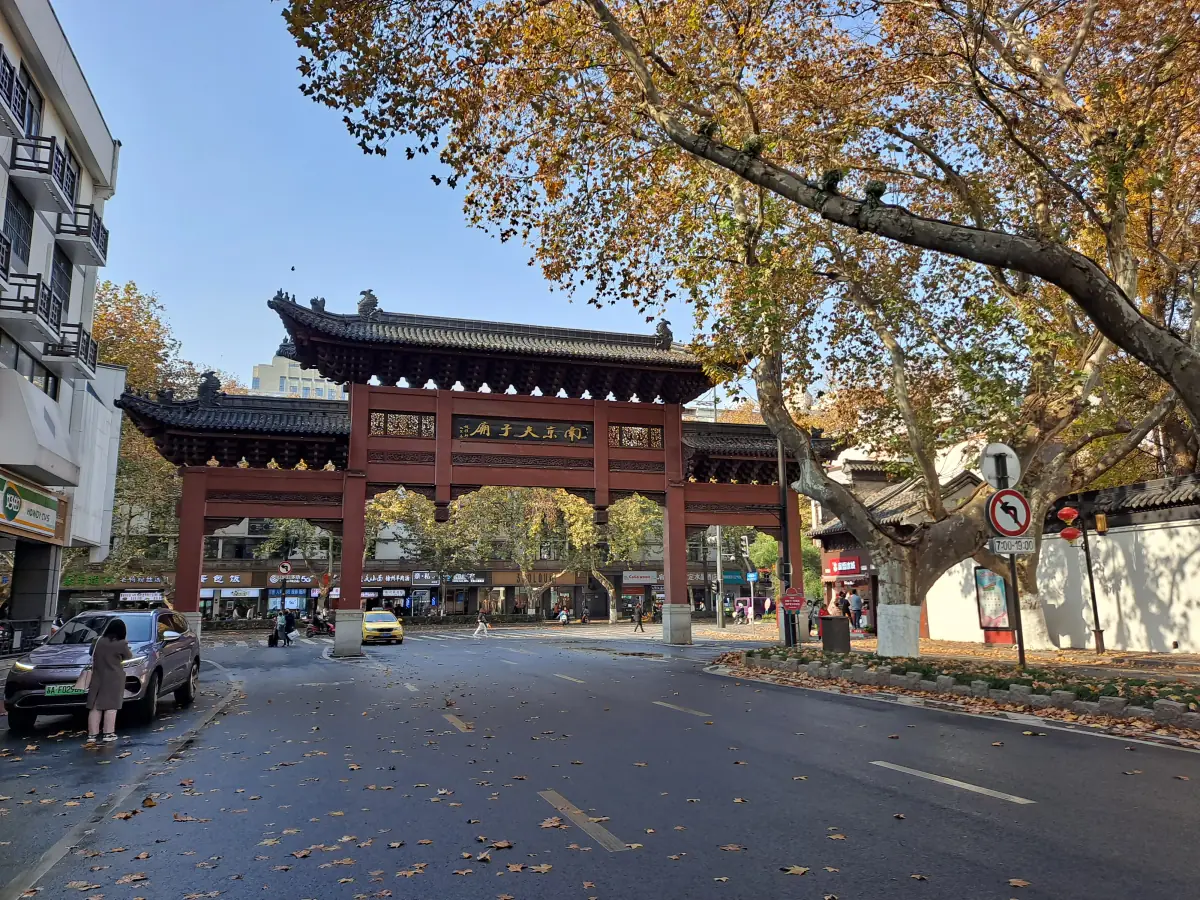
Ceremonial paifang at the entrance to Nanjing’s Fuzimiao district
The ceremonial paifang identifies the Fuzimiao district entrance.

Photo: 钉钉 · CC BY-SA 4.0 · Resized.

Private planning

Place Confucius Temple in Nanjing inside a better route.

A landmark is strongest when it belongs to a larger rhythm. We can shape a private China journey around cities, contrasts, and the kind of cultural depth you want to leave with.

Frequently asked questions

Is the Confucius Temple area only a sightseeing street?

No. The open streets are one layer; paid temple halls and the examination museum hold much of the ritual and scholarly history. Choose an interior if those subjects matter to you.

Do I need a reservation?

Ordinary access generally differs from designated peak periods. The core district has used free afternoon-and-evening reservations during holidays and a summer window. Confirm the current local notice for your date.

How much time should a visit take?

Allow one to two hours for a focused walk plus one hall, with more time for the examination museum or an evening extension. Check each interior’s last admission separately.

What should this area be combined with?

Choose the city wall or Ming Xiaoling, with a rest and transfer time between visits. Avoid making all three compulsory stops on an already crowded day.

Does a free district reservation include the paid halls?

No. Crowd-management access and attraction admission are different. Check Dacheng Hall and Jiangnan Gongyuan separately for current tickets, opening hours, and entry conditions.

Your China journey

Let’s start with your idea.

You do not need a finished itinerary. Tell us what interests you and what you would like help planning.

  • Patrick and Zoe personally review your note.
  • We begin by email; a call can follow if useful.
  • An inquiry starts a conversation, with no commitment to book.

Prefer email? liminachina@outlook.com

Tell us about your trip.

Only your name, email and a short note are required.

About: Nanjing - Confucius Temple in Nanjing

Add more trip details (optional)