Landmark guide

Big Wild Goose Pagoda: Buddhist Memory and Silk Road Exchange in Xi'an

The pagoda rises from Da Ci’en Temple, where Xuanzang’s scriptures connect Xi’an to journeys, translation, and Buddhist learning. Begin with the temple rather than the square.

You can understand this site without climbing it. Decide what the stairs add to your visit before buying a second ticket.

This page belongs inside the broader Xi'an for Cultural Travelers: Dynastic Memory, Silk Road Layers, and First China Depth guide, where this landmark is placed inside a more coherent city rhythm.

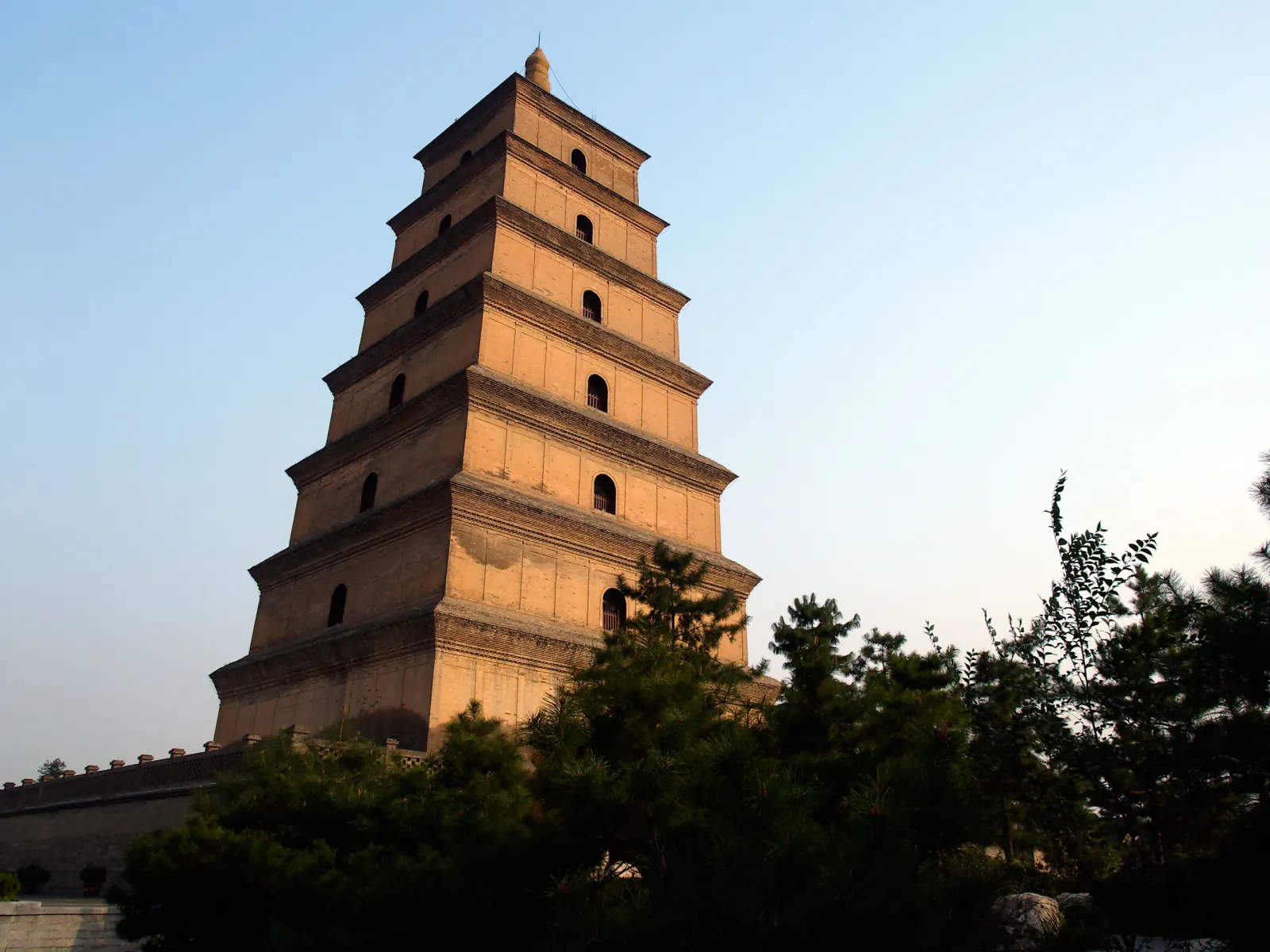
Brick tiers of the Big Wild Goose Pagoda above trees in Xi’an

Photo: Alex Kwok · CC BY-SA 3.0 · Resized.

Xi'anBig Wild Goose Pagoda

  • Temple admission and the optional pagoda climb are separate.
  • Steep, narrow stairs and no lift make climbing a personal choice.
  • Xuanzang and translation add a Buddhist layer to an Xi’an city day.

Short answer

Why Big Wild Goose Pagoda matters

First, Da Ci’en Temple admission and the pagoda climb are separate tickets. Second, the optional climb is usually purchased on site; confirm availability, current tariffs, and seasonal hours before committing. Third, visit for Xuanzang’s scriptures and Silk Road exchange, keeping the Terracotta Warriors on a separate longer day rather than rushing both into one morning.

Temple ticket versus pagoda climb

The Big Wild Goose Pagoda stands inside Da Ci’en Temple. Start by checking the temple admission conditions, then decide whether you want the separate climb. The climb is usually bought on site and may not be available whenever the temple itself is open. Confirm what is being sold on the day.

Published prices differ across government English introductions and more recent local travel information. Treat neither an old tariff nor an unofficial guidebook amount as a guaranteed official price. Confirm today’s tariff at the current official channel or the on-site window before paying. This guide deliberately keeps the distinction between the two tickets clearer than any uncertain number.

The north square and its fountain are outside the temple’s red walls. They are a different public-space visit, not part of the ancient pagoda or an experience included with temple admission. If you want to see the fountain, check its current schedule separately; do not choose your temple entry time by assuming a show will follow immediately.
Hours and how long to allow

Seasonal opening hours and last entry change, and published descriptions disagree. Confirm the current official notice before setting out. Ask separately about temple entry, last admission to the climb, and whether any part of the site is temporarily unavailable. An advertised closing time is not necessarily the latest moment to buy a ticket.

One to two hours is a useful allowance for the temple at a measured pace. Allow longer if you climb, need regular rests, or add the surrounding square. The time on the stairs includes coming down; it should not be squeezed into the final minutes before another commitment.

Use the site within an Xi’an city day, with a meal and space between visits. The city wall can be a separate chapter if your walking capacity allows. Keep the Terracotta Warriors on their own longer day, with time for travel and the archaeological site. Two famous places on the same list are not automatically convenient neighbors.

Whether to climb, and what the stairs involve

The climb uses steep, narrow stairs and there is no lift. Think about knees, balance, discomfort with heights, and the return descent before purchasing the extra ticket. Being able to reach the first landing does not remove the effort of the full route or the need to pass other visitors.

Skipping the climb is a complete and reasonable choice. You can look at the seven-storey brick structure from the temple grounds and spend your time understanding why it was built. A traveler interested in Buddhist transmission may gain more from a slower courtyard visit than from concentrating on stair counts and a view.

If members of your party choose differently, agree where to meet and allow a realistic time to return. Do not pressure someone to climb simply because others have bought tickets. Leave enough margin for queues, a slower descent, and a rest afterwards; the climb is an optional addition, not the measure of a successful visit.

How to experience it with more depth

The pagoda was built in 652 to house scriptures and images brought from India by Xuanzang. The surviving seven-storey brick tower is commonly described as about 64.5 metres high. Its importance lies in the movement and translation of ideas, not simply its place in an Xi’an skyline photograph.

Walk the temple first. Give the courtyards and the relationship between halls and tower time before deciding on the climb. Ask how a journey carrying texts became a project of translation and religious learning. That question makes the Silk Road more than a route for objects and trade.

The contrast with the Terracotta Warriors is useful precisely because the subjects differ: imperial burial and state power on one day, Buddhist learning and exchange on another. Read what first-time visitors often misread in a city of icons when choosing how to frame Xi’an beyond its best-known image.

A guide or careful independent reading should connect what you see to the reason the tower exists. That is why the pagoda’s meaning depends on context. You do not need to claim a personal spiritual experience or see every corner to make that connection. A few well-framed observations can carry the visit.

Pitfalls to avoid

Do not buy a temple ticket assuming the climb is included, or buy the climb merely because you have already entered the temple. Check both products and any same-day restrictions. A closed or unavailable climb does not erase the value of time in the monastery.

Do not confuse the fountain or the surrounding visitor district with the ancient tower. Evening entertainment may be enjoyable, but it cannot explain Xuanzang’s translation work for you. Keep its schedule separate so that waiting for a show does not consume the temple hours you intended to use.

Avoid promising an exact tariff or repeating an unsupported claim that the pagoda closes every Monday. Follow a current official notice, especially where English and Chinese introductions differ. A flexible city afternoon is easier to adjust than a tightly timed stop on the way to the Warriors.

Finally, treat the temple as a religious place as well as a visitor destination. Follow posted photography and access rules, keep pathways clear, and let active worship take priority over a photograph. The most useful visit begins with attention to the place you are entering, rather than an expectation that every part exists for sightseeing.

Sources and further planning

Reference information checked on 2026-11-13. Confirm current hours, availability and transport before visiting.

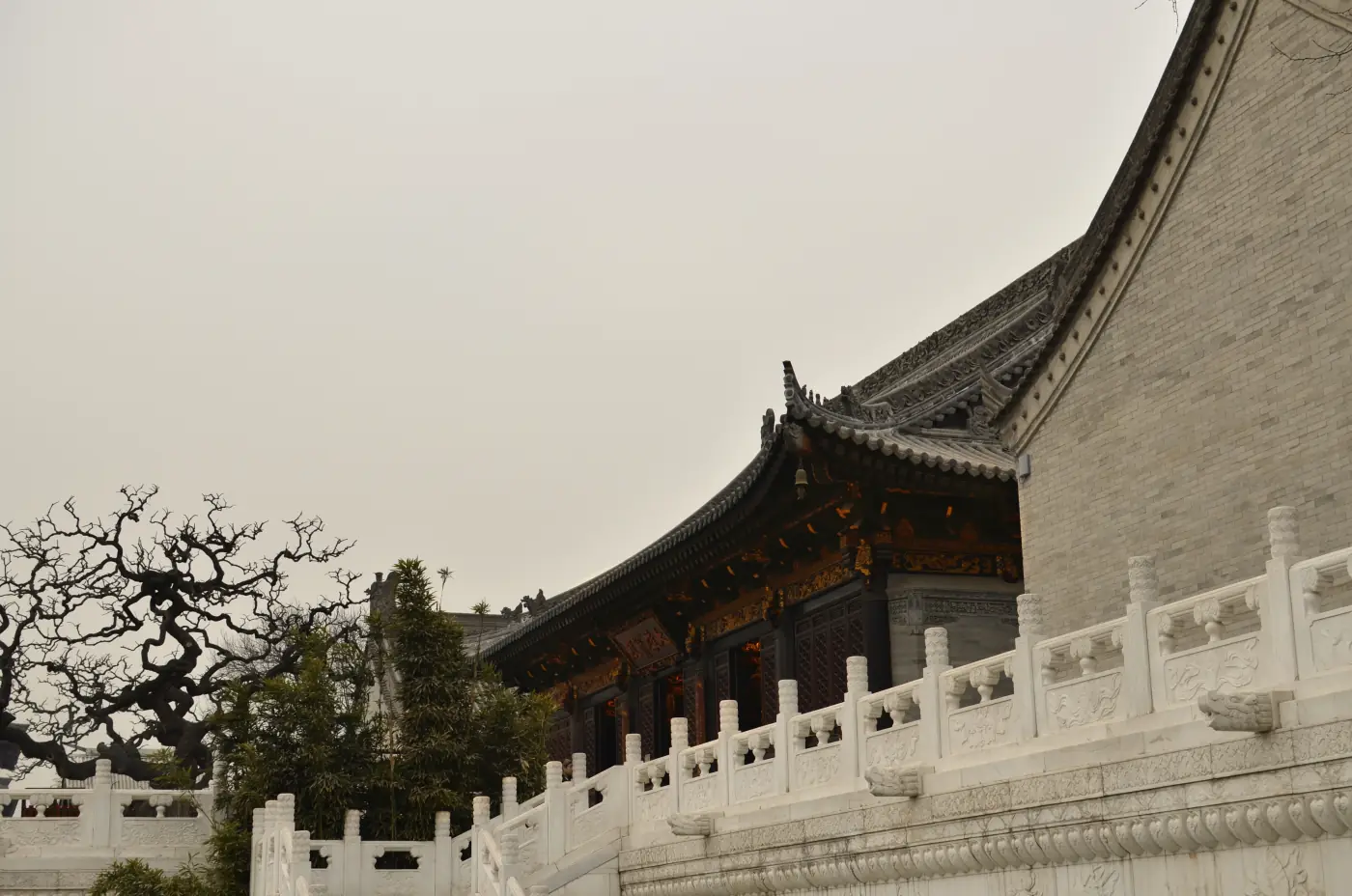
Hall and marble terrace at Da Ci’en Temple in Xi’an
A temple hall and marble terrace within Da Ci’en Temple.

Photo: ReeveJ · CC BY-SA 3.0 · Resized.

Private planning

Place Big Wild Goose Pagoda inside a better route.

A landmark is strongest when it belongs to a larger rhythm. We can shape a private China journey around cities, contrasts, and the kind of cultural depth you want to leave with.

Frequently asked questions

Is the Big Wild Goose Pagoda important for first-time visitors?

Yes if you want Xi’an to include Buddhist learning and Silk Road exchange alongside imperial history. It complements the Terracotta Warriors; keep the Warriors on a separate longer day.

Do I need two tickets?

If you climb, temple admission and the pagoda climb are separate. The climb is usually purchased on site. Confirm today’s tariffs and whether climbing is available before paying.

How long should a visit take?

Allow one to two hours for the temple and longer for a climb or a square visit. Check seasonal hours and last entry rather than scheduling it against an uncertain closing time.

Can I skip the climb?

Yes. Steep, narrow stairs and no lift make it unsuitable for some visitors. The temple and the exterior of the tower still explain the site’s Buddhist and Silk Road role.

Is the north-square fountain part of the temple ticket?

No. The square and fountain are outside the temple and have a separate schedule. They are not part of the ancient pagoda or a substitute for visiting the monastery.

Your China journey

Let’s start with your idea.

You do not need a finished itinerary. Tell us what interests you and what you would like help planning.

  • Patrick and Zoe personally review your note.
  • We begin by email; a call can follow if useful.
  • An inquiry starts a conversation, with no commitment to book.

Prefer email? liminachina@outlook.com

Tell us about your trip.

Only your name, email and a short note are required.

About: Xi'an - Big Wild Goose Pagoda

Add more trip details (optional)