Landmark guide

Kuanzhai Lanes in Chengdu: Scale, Texture, and the Social Feel of the City

Kuanzhai Lanes matter because they let travelers feel Chengdu through scale and movement rather than through monumentality. Lane environments, courtyards, shops, and public rhythm reveal how the city negotiates memory, commerce, and ease. For cultural travelers, the area becomes useful when it is read as atmosphere and urban behavior rather than merely as a packaged heritage zone.

Neighborhood-scale environments often tell the truth of a city faster than any overview. In Chengdu, Kuanzhai Lanes can do that when visited with the right expectations.

This page belongs inside the broader Chengdu for Cultural Travelers: Teahouse Life, Ease, and the Texture of Sichuan guide, where this landmark is placed inside a more coherent city rhythm.

Pedestrians and traditional shopfronts along Chengdu’s Kuanzhai Alleys

ChengduKuanzhai Lanes

  • Kuanzhai Lanes is strongest when visited with enough pacing and interpretation to let its logic register.
  • Best for private travelers who want meaning, not just recognition, from a major site.
  • Usually works better as part of a quieter Chengdu day than as one more stop inside an overloaded checklist.

Short answer

Why Kuanzhai Lanes matters

Kuanzhai Lanes matter because they let travelers feel Chengdu through scale and movement rather than through monumentality. Lane environments, courtyards, shops, and public rhythm reveal how the city negotiates memory, commerce, and ease. For cultural travelers, the area becomes useful when it is read as atmosphere and urban behavior rather than merely as a packaged heritage zone.

Why lane environments matter here

Kuanzhai Lanes give Chengdu a legible human scale. The area helps travelers read how memory, leisure, small commerce, and urban softness interact in one visible environment.

That makes it valuable as part of a broader route, especially when the goal is to understand how the city feels to inhabit.

How to avoid flattening the experience

The strongest visit does not treat the lanes as a checklist stop. It looks at rhythm, social behavior, transitions between busier and quieter pockets, and how Chengdu’s everyday ease becomes spatially visible.

Paired with teahouse culture or Wuhou Shrine, the area can help complete a more layered reading of the city.

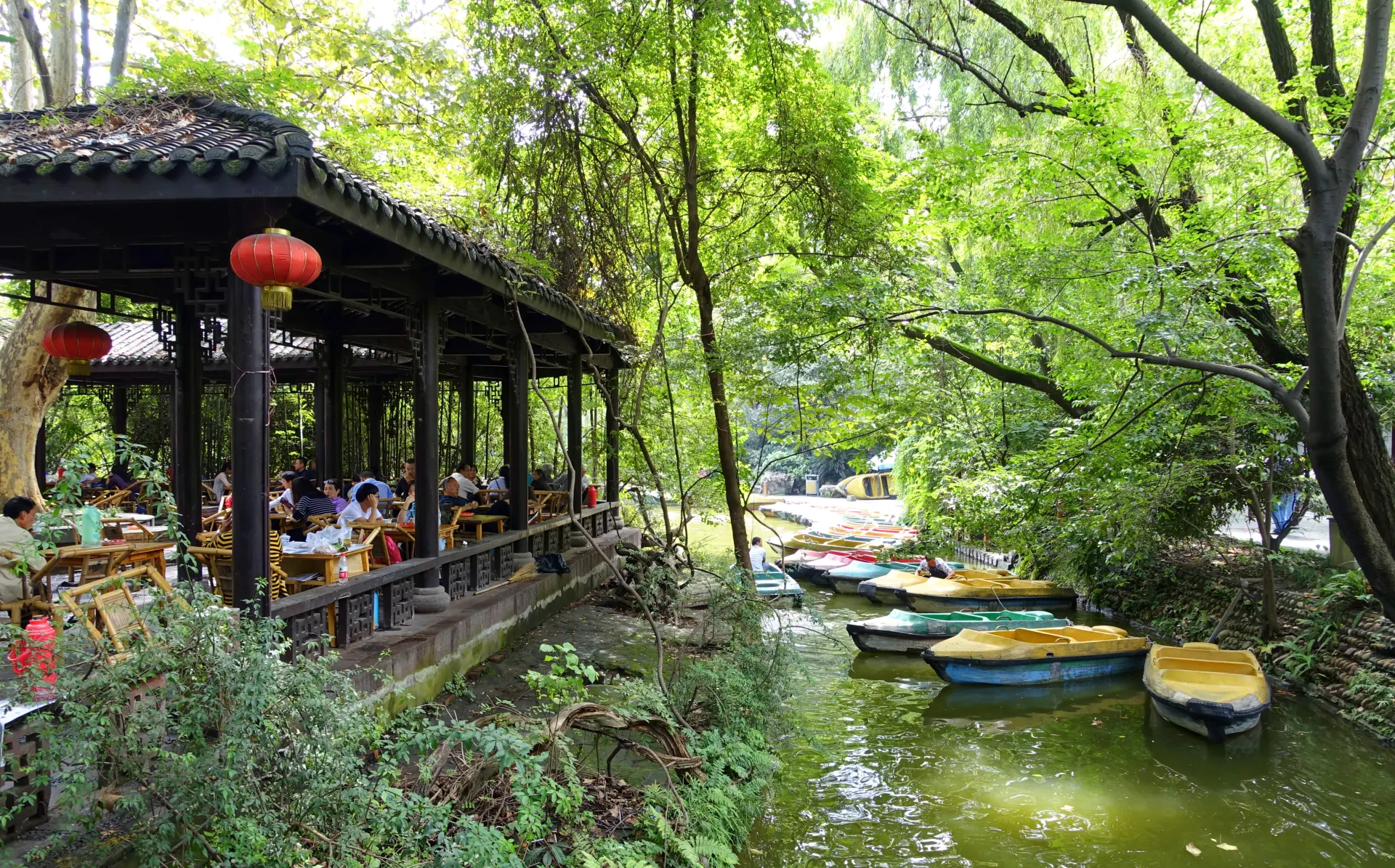
Lakeside teahouse and small boats under trees in Chengdu’s People’s Park
A waterside teahouse and small boats in Chengdu’s People’s Park.

Private planning

Place Kuanzhai Lanes inside a better route.

A landmark is strongest when it belongs to a larger rhythm. We can shape a private China journey around cities, contrasts, and the kind of cultural depth you want to leave with.

Frequently asked questions

Are Kuanzhai Lanes too commercial for cultural travel?

They can feel shallow if rushed, but with the right framing they still reveal useful aspects of Chengdu’s scale, pace, and social atmosphere.

Should Kuanzhai Lanes be part of a first Chengdu route?

Often yes, especially when combined with teahouse culture and another site that adds historical depth.

How much time should be spent there?

One to two slower hours is often enough when the goal is texture rather than coverage.

What kind of traveler connects with this area most?

Travelers interested in urban atmosphere, photography, walking rhythm, and how a city feels in practice.

Your China journey

Let’s start with your idea.

You do not need a finished itinerary. Tell us what interests you and what you would like help planning.

  • Patrick and Zoe personally review your note.
  • We begin by email; a call can follow if useful.
  • An inquiry starts a conversation, with no commitment to book.

Prefer email? liminachina@outlook.com

Tell us about your trip.

Only your name, email and a short note are required.

About: Chengdu - Kuanzhai Lanes

Add more trip details (optional)