City guide

Suzhou for Cultural Travelers: Gardens, Canals, and Scholar Aesthetics

Suzhou gives a first China journey a quieter register: garden windows, canal houses, and rooms designed around what they frame rather than how much they contain.

Come for the gardens, but leave time between them. A canal walk and a second morning reveal more than a rapid circuit of famous gates.

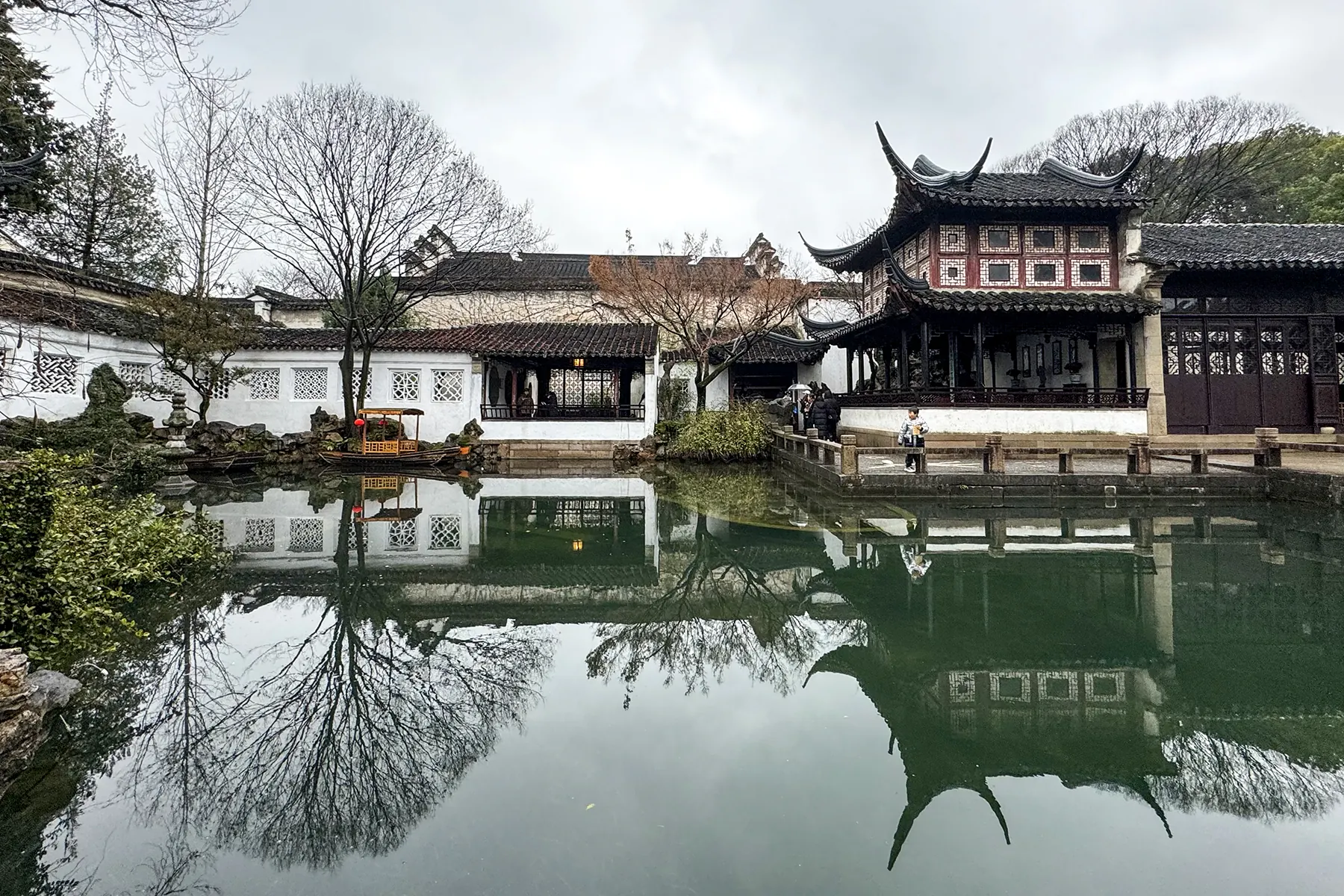
Waterside pavilions reflected in a pond at the Lingering Garden in Suzhou

Photo: Windmemories · CC BY-SA 4.0 · Resized.

East and Aesthetic ChinaSuzhou

  • Two nights for one large garden, a smaller garden, and time between them.
  • Book garden admission separately from the free Pingjiang canal walk.
  • Pair with Shanghai; add Hangzhou only when each city has its own nights.

Answer-first summary

Why Suzhou belongs in a deeper China journey

For a first cultural stay, allow two nights in Suzhou: one focused garden morning, a slower canal walk, and a second morning for a smaller garden or a craft visit. Book the Humble Administrator’s Garden in advance and do not stack it with Lingering Garden and Pingjiang Road in one day. The open canal neighborhood needs no admission ticket; garden reservations are separate. Suzhou earns its place on a first trip by bringing private space, cultivated landscape, and everyday street life into view. Beside Shanghai, it offers a change of scale rather than another metropolitan sightseeing day.

Why Suzhou matters in a deeper route

Suzhou teaches through proportion rather than magnitude. A window can turn a rock and a branch into a complete view; a covered corridor changes how you approach the next room. These are useful things to look for before trying to remember the names of every pavilion.

The classical gardens are a UNESCO World Heritage property, inscribed in stages from 1997. That recognition is a starting point for attention, not a requirement to collect every listed garden. Look at how water, buildings, plants, and borrowed views work together. Then take those observations into the streets, where a canal house uses a much smaller space for a different kind of daily life.
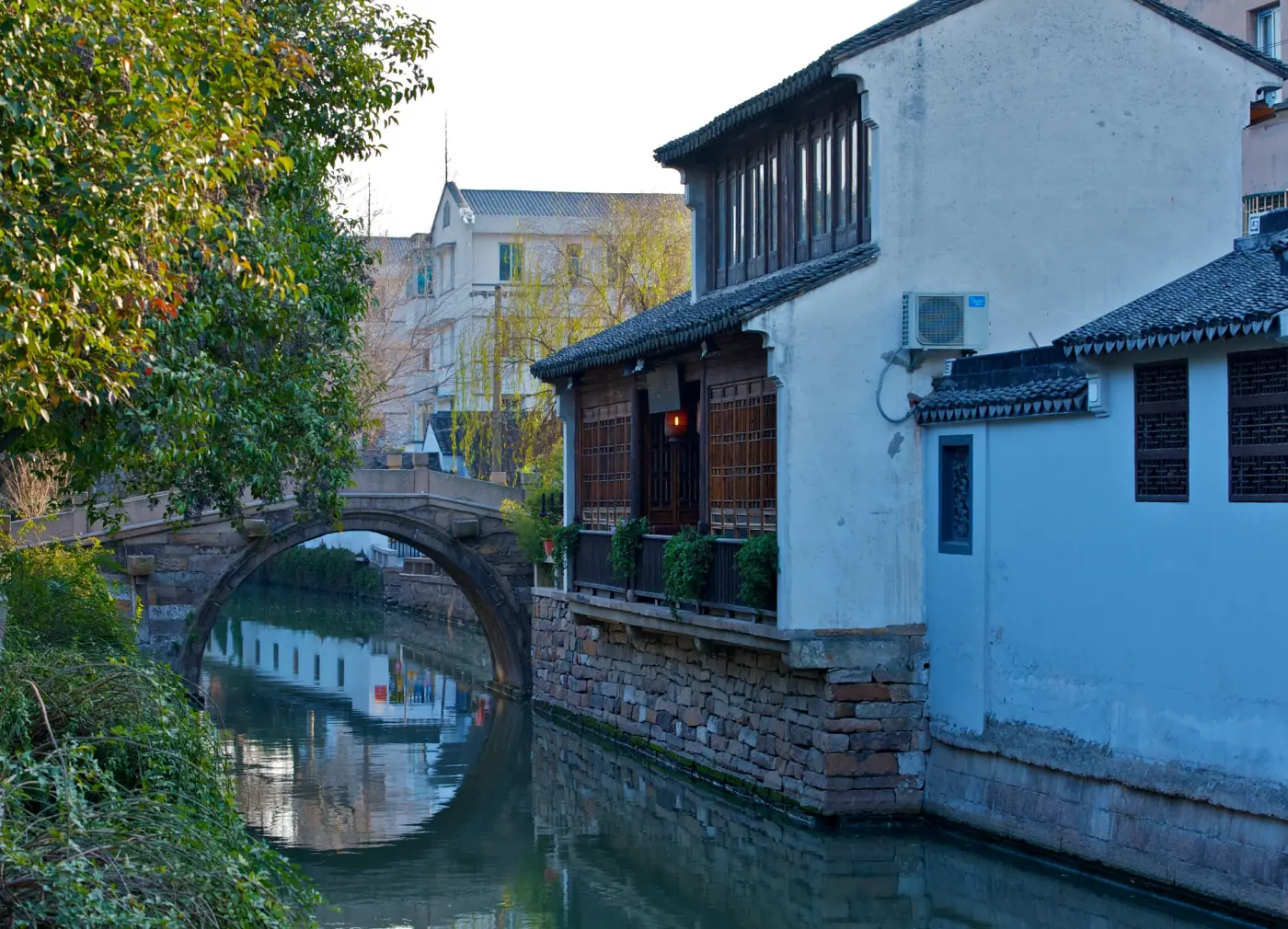

Stone arch bridge and waterside houses along Pingjiang Road in Suzhou
A stone arch bridge crosses the canal beside Pingjiang Road in Suzhou.

Photo: kevinmcgill · CC BY-SA 2.0 · Resized.

Gardens, canals, and scholar aesthetics

Classical gardens are composed worlds shaped around sequence, framing, water, stone, and pauses. Their scholar associations become easier to understand when you stop at a window, look back through a doorway, and notice how a short walk can conceal and reveal the same pond.

For a first visit, choose one large garden and one smaller garden across separate mornings, with Pingjiang Road between them. Humble Administrator’s Garden can anchor the northeast old city; a smaller garden on the next day provides comparison without repeating a long ticketed visit. Lingering Garden is a valid alternative large garden, not an automatic extra. This is why fewer sights can mean more in China.

A canal walk lets the eye adjust from private composition to public movement. Keep time for tea or a craft visit instead of filling every gap with another admission. The point of the second garden is to notice a different use of space, not to make the list longer.

Workers operating silk-reeling machinery at Suzhou No. 1 Silk Mill
Silk production at Suzhou No. 1 Silk Mill, photographed in 2007. This historical photograph illustrates the city’s textile industry.

Photo: Armin Kübelbeck · CC BY-SA 3.0 · Resized.

Which gardens to book, and how tickets work

Use the official Suzhou Gardens Tourism booking channel for current reservations and tariffs. Humble Administrator’s Garden is among the busiest choices and commonly uses advance real-name booking, with availability often released within one to seven days. Confirm the current window before organizing your stay around a particular date. Enter the identification details you will carry and check the cancellation terms before paying.

Garden tickets have seasonal tariffs; check the current official tariff before you book. Old English-language introductions can retain outdated prices. A daytime ticket should not be assumed to cover a separate night-garden program, and a reservation for one garden does not admit you to another. Pingjiang Road is a free open neighborhood and has no garden admission to purchase.

The municipal garden bureau lists seasonal opening and last-entry times. Many major gardens open at 07:30, closing at 17:30 in March–October and 17:00 in November–February, with last admission thirty minutes earlier. Holiday extensions and night programs have separate notices: confirm the current official notice for your date. Do not plan a late arrival using the closing hour as the admission deadline.

A two-night Suzhou outline

Arrival afternoon: settle in, then take a short canal walk if your journey leaves enough energy. Keep the first evening light rather than booking a garden against an uncertain train arrival. Choose a hotel for the walking and transfer pattern of your stay, not only its distance from a station.

First full day: give the morning to your prebooked large garden. Have lunch and a real break, then walk Pingjiang Road and a few public side lanes. Two or three hours there can include sitting down rather than continuous walking. Do not add Lingering Garden simply because the afternoon appears empty on paper.

Second morning: visit a smaller garden or make time for craft, depending on your interests. Leave a buffer for returning to the hotel and collecting luggage before a train. Travelers who want both major gardens should add time or exchange the smaller visit, rather than compressing three substantial experiences into the first day. Rain also makes a flexible second morning useful: garden corridors and reflections reward a slower visit, but wet stone deserves care.

How Suzhou pairs with Shanghai and Hangzhou

Shanghai and Suzhou offer a clear contrast: outward-looking metropolitan streets beside smaller domestic landscapes. Give Suzhou its own two nights if gardens and canals are central interests. A day trip can show one garden, but station transfers and fixed return times often consume the pauses that make the city worthwhile.

Hangzhou adds lake landscape and tea country rather than a second version of Suzhou. Include both only when the route has room to give each city separate nights. If the eastern chapter is short, choose the one that better matches your interests instead of using both as interchangeable water-town stops.

See the Beijing–Hangzhou–Shanghai luxury itinerary this pairing often sits inside for the larger city roles. Adding Suzhou should change the allocation of nights; it should not silently take a day from every other city. Check current trains and hotel locations before deciding the order.

Sources and further planning

Public information checked on 2026-11-13: UNESCO’s Classical Gardens of Suzhou listing explains the heritage designation; the Suzhou garden bureau’s opening-hours page lists seasonal access. Use the official Suzhou Gardens Tourism booking channel linked through municipal garden information for live availability and tariffs.

The Suzhou government’s Pingjiang neighborhood introduction distinguishes the free open district from paid garden visits. Confirm temporary access notices before holidays. The outline above is a planning suggestion, not a promise of admission or a fixed package.

Private route design

Use Suzhou as part of a more coherent China story.

If this city feels essential to the China you want to experience, we can shape it into a private route with stronger pacing, cultural depth, and calm support.

Frequently asked questions

Do I need to book Suzhou garden tickets in advance?

Yes for the busiest gardens, especially Humble Administrator’s Garden. Use the official garden booking channel, enter the identification you will carry, and confirm current booking rules before travel.

How many gardens should a first visit include?

One large garden and one smaller garden across two mornings is a sound starting point. A single garden visited slowly can be better than a same-day circuit of famous names.

How long should a cultural stay in Suzhou be?

Two nights allows one garden morning, a canal afternoon, and a second morning for a smaller garden or craft. A day trip usually needs a narrower choice.

Should Suzhou be combined with Hangzhou on the same trip?

Yes when there is room for two slower cities, each with its own nights. Choose between them when adding both would remove the pauses from your eastern route.

Why travelers choose Limina

High-touch guidance for a country that rewards depth.

01

Private cultural journey

Every route is shaped around rhythm, perspective, and a more intelligent relationship with place.

02

Creator-ready content support

We design with atmosphere, timing, and visual sensitivity in mind for photographers, writers, and founders alike.

03

Bilingual cultural guidance

Translation and interpretation stay close to the journey, so complexity becomes legible instead of flattening out.

04

Bespoke itinerary design

We begin with fit, not packages, and shape the route around what kind of China the traveler wants to meet.

05

High-touch travel experience

Luxury serves clarity: fewer frictions, stronger transitions, and more space for meaning to gather.

Your China journey

Let’s start with your idea.

You do not need a finished itinerary. Tell us what interests you and what you would like help planning.

  • Patrick and Zoe personally review your note.
  • We begin by email; a call can follow if useful.
  • An inquiry starts a conversation, with no commitment to book.

Prefer email? liminachina@outlook.com

Tell us about your trip.

Only your name, email and a short note are required.

About: Suzhou | East and Aesthetic China

Add more trip details (optional)