
L Limina China Threshold journeys through China

Practical China Travel / Before You Arrive

How to pay in China

A practical guide for first-time visitors.

A coffee, a taxi, a small purchase along the way. Preparing how you will pay leaves more room for the place itself. Set up a mobile wallet, carry a physical card, and keep a little renminbi within reach.

A customer holding her phone toward the payment reader at a Ziguangyuan food counter in Beijing
At a Beijing food counter.A customer presents her phone to the payment reader. Photo: N509FZ, 2025 · CC BY-SA 4.0. Resized; cropped to fit.

Start here

One wallet, with a backup.

Our recommendation is to prepare Alipay or WeChat Pay before departure, then add the other if useful. Bring a physical bank card and a modest cash reserve as well. Eligible overseas cards can be linked without opening a mainland Chinese bank account. See the official card guidance.

This guide covers everyday visitor spending. Hong Kong and Macao have different payment arrangements. For any purchase, the fee, available limit and eligibility shown in your app or by your bank take precedence.

01 / Before departure

Set up while you have time.

Give yourself time at home for registration and any bank checks. Have your passport and a bank card in your own name available, and make sure you can receive verification messages while traveling. Keep a working mobile-data plan and your bank’s support details accessible.
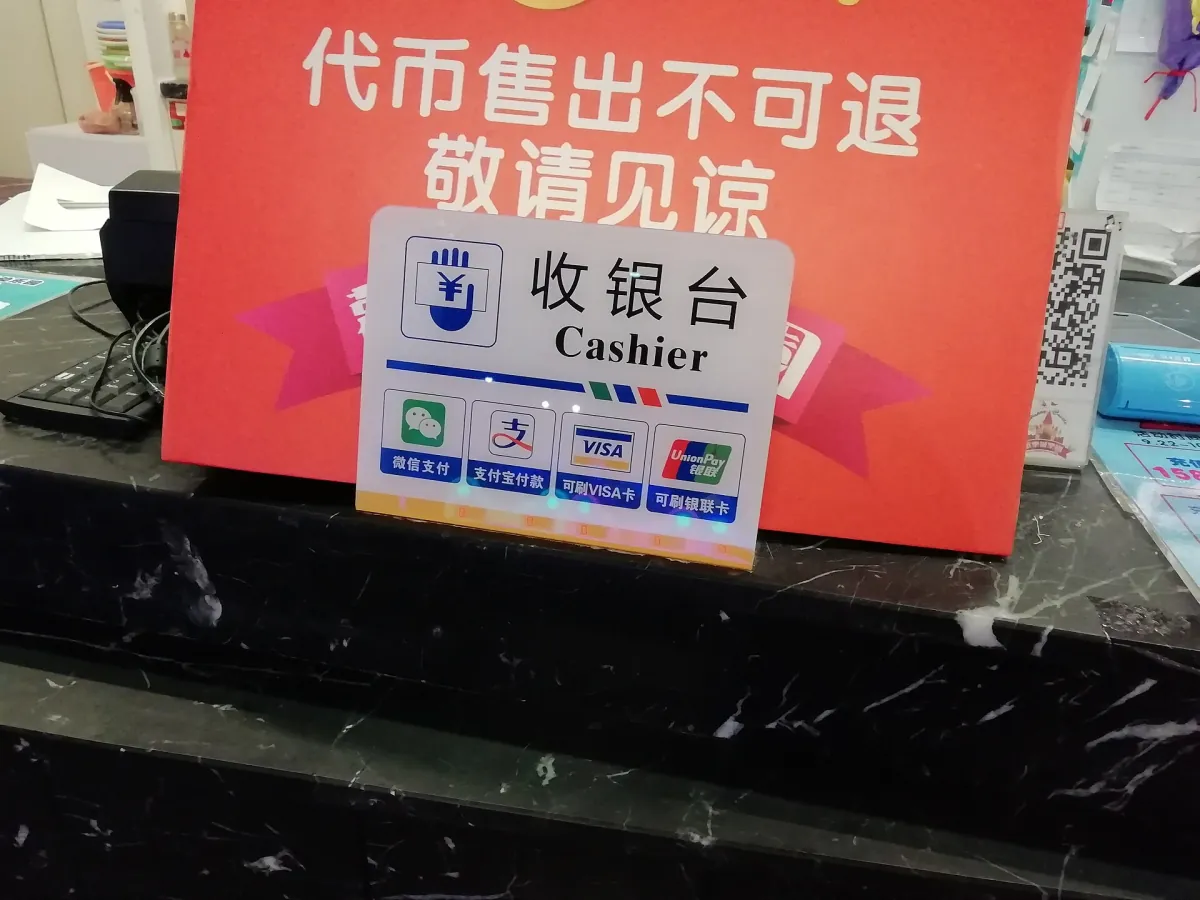
A cashier sign in Suzhou displaying WeChat Pay, Alipay, Visa and UnionPay logos
Recognize the payment signs.A photographed cashier sign in Suzhou. Check which methods the merchant can accept when you arrive. Photo: Shwangtianyuan, 2018 · CC BY-SA 4.0. Resized for the web.

Alipay

  1. Install the official Alipay app. Choose English if needed and register with your mobile number; an overseas number can be used before arrival.
  2. Open Me → Bank Cards and add an eligible card.
  3. Follow the verification prompts. Check that the card appears as an available payment method.

WeChat Pay / Weixin Pay

  1. Install or update the official WeChat app, then register or sign in.
  2. Open Me → Services → Wallet → Bank Cards and follow the card-linking prompts.
  3. Complete any requested identity checks. Menu labels can vary with the app version and account.

The Shanghai government’s mobile-payment guide sets out both routes. A supported card network does not guarantee that every card will link: the issuing bank and your account also matter.

Alipay requires you to use your own card and may request identity information. Read Alipay’s international-card terms.
02 / On arrival

Know which code to use.

There are two common checkout methods: scan the merchant’s payment code and enter the amount if asked, or show your payment code for the cashier to scan. Check the merchant name, amount and selected card before confirming. Official payment steps.

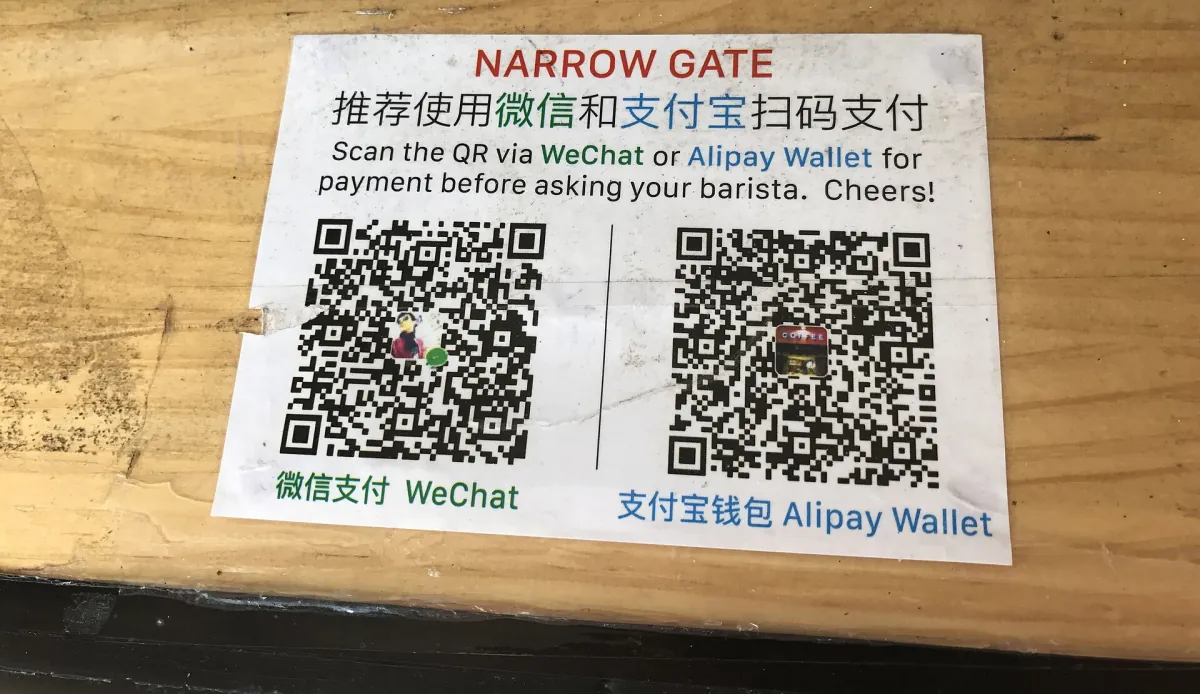
A printed café sign with separate WeChat and Alipay payment QR codes on a wooden counter
When you scan the merchant’s code.A café payment sign photographed in China. This is a reference photograph; use the code at your own checkout, then confirm the merchant and amount. Photo: Harald Groven, 2017 · CC BY-SA 2.0. Resized for the web.

For your first purchase, choose a quiet moment when you can check the result. Keep the transaction record until you are sure the payment has completed. This gives you a useful reference if the next purchase behaves differently.

A merchant purchase and a person-to-person transfer are different services. Alipay’s linked international-card service is for merchant spending; it does not support transfers or cash withdrawals. If a QR code opens a transfer request, ask for a merchant payment option or use a backup. Alipay’s permitted uses.

03 / Fees and limits

Check the whole cost.

For overseas cards linked to Alipay or Weixin Pay, the Shanghai government’s published guidance gives the following baseline. Promotional waivers can change the amount charged.

Platform service fees for linked overseas cards
Single purchasePublished fee guidance
RMB 200 or lessGenerally exempt from the platform service fee.
Above RMB 200A 3% fee may apply to the full purchase amount.

For example, if the standard fee applies to an RMB 300 purchase, it adds RMB 9. The total is RMB 309 before any separate card-issuer charges.

Your bank may apply its own foreign-transaction charges and currency-conversion terms. Check those separately: a platform waiver does not remove your bank’s charges. Alipay also directs users to its service screen for current fees and to the issuer’s statement for the final home-currency amount. Alipay’s fee and conversion terms.

A separate WeChat promotion

On 27 May 2026, Tencent announced a processing-fee waiver for first-time users linking an international card to WeChat: 90 consecutive calendar days from the first transaction, covering up to RMB 1,000 in spending per day. This is a promotional allowance, not a daily spending limit. Check the offer’s availability, eligibility and end date in your app before relying on it. Read Tencent’s announcement.

Published spending ceilings

Official guidance lists up to USD 5,000 per transaction and USD 50,000 cumulatively per year for linked overseas cards. These are published ceilings, not guaranteed allowances for every account. Source: official card guidance.

Tencent specifies verified identity for access to its higher limits. Alipay also applies account limits and issuer rules, including possible daily or monthly caps. Check the limit displayed for your account before a large purchase. Tencent’s verification guidance · Alipay’s limit terms.

For a hotel deposit or a larger bill, ask about accepted payment methods ahead of time. This is easier to resolve before you reach the counter.

04 / A second way to pay

Keep cards and cash in the plan.

Carry your physical card. At a payment terminal, look for your network’s logo and ask whether the merchant can accept it. Acceptance depends on the merchant and terminal; a mobile-wallet logo alone does not confirm direct card acceptance. See the original payment-service guide.

Renminbi, also called RMB or yuan, remains mainland China’s legal tender. A small reserve in useful denominations gives you another option if your phone is unavailable. The right amount depends on your arrival arrangements and how much independent spending you expect.

Overseas cards can withdraw RMB at compatible ATMs displaying the relevant network logo. Authorized exchange counters are another option; availability and rates vary. Shanghai’s official guide describes airport and bank options. Read the cash and exchange guidance.

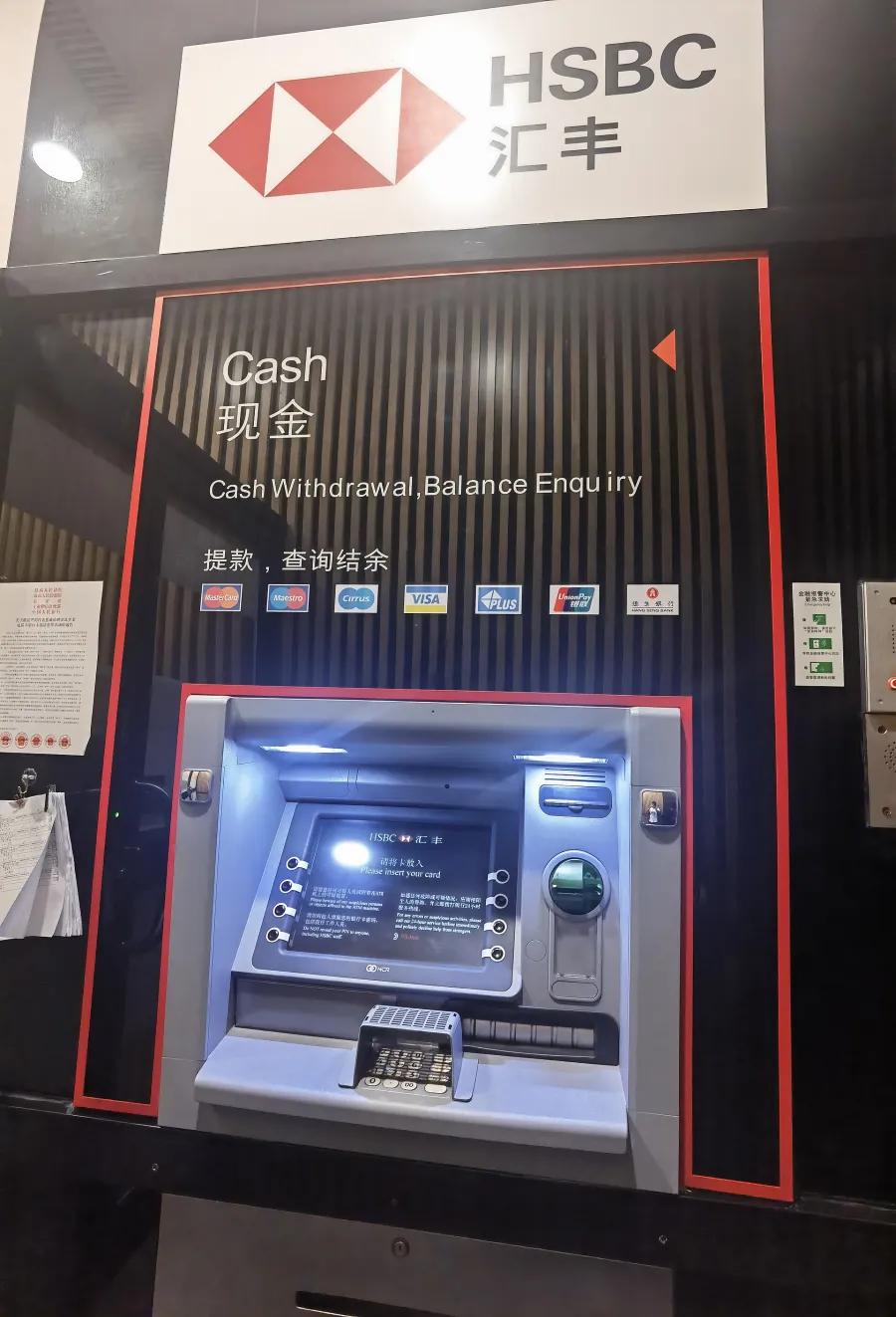
An HSBC ATM in Shenzhen with bilingual cash-withdrawal signage and international card-network logos
Look for your card’s network.An ATM photographed in Shenzhen. The network logos help you identify a possible withdrawal option; check your card’s eligibility and the charges shown before proceeding. Photo: Lhzss8, 2023 · CC BY-SA 4.0. Resized for the web.

Before departure, check your bank’s overseas withdrawal rules, fees and PIN requirements. At the machine, review the amount and any displayed charges before accepting. Do not assume a mobile-payment allowance is also your cash-withdrawal limit.

05 / When a payment fails

Pause, check, then change methods.

A declined payment can be an account, card, connection or merchant issue. Start with what the screen actually says.

  1. Check the transaction record. If the status is unclear or pending, confirm with the merchant before trying again.
  2. Read the prompt. Check connectivity, the selected card, any verification request and the available limit.
  3. Confirm the payment route. Ask whether the code is for merchant payment and whether a different checkout method is available.
  4. Use your backup. Try another prepared wallet or card, a supported physical terminal, or cash. Contact the app or bank through its official support channel if needed.

For a refund, begin with the merchant and keep the original transaction reference. Check the app and your card statement to follow its progress; ask the issuer about any difference in the amount returned in your home currency.

Before you leave

A short payment checklist.

  • Your chosen wallet is installed and your card is linked.
  • You have checked any outstanding identity-verification prompts.
  • You can receive bank or app verification messages abroad.
  • You understand your issuer’s charges and overseas-use settings.
  • You have a physical card, an alternative payment method and a plan for obtaining RMB.
  • You have saved your bank’s support details and arranged mobile data and phone charging.

Once those details are in place, return to the more interesting preparation: the neighborhoods you want time for, the meals you are curious about, and the pace that will let you enjoy them. Continue with preparing for your first journey to China.

Sources & review date

Where the details come from.

This is Limina China’s independently written guide. Public guidance was checked on ; app screens and account-specific terms may change. The original booklet is linked below for further reading.

  1. Guide to Payment Service in China — Chinese Visa Application Service Center, Mumbai. General payment overview; page dated 9 July 2026.
  2. Pay with overseas bank cards — International Services Shanghai. Fee thresholds and published spending ceilings.
  3. How to use mobile payments in Shanghai — International Services Shanghai. App setup and checkout methods.
  4. Tencent’s inbound-payment announcement, 27 May 2026. The first-time international-card fee waiver.
  5. Tencent’s visitor-payment update, 12 April 2024 (Chinese). Identity verification and higher limits.
  6. Alipay’s international-bank-card service agreement. Cardholder requirements, permitted uses, fees and issuer limits.
  7. How to exchange foreign currency for RMB — International Services Shanghai. Cash, ATMs and exchange options.

From preparation to place

Make room for the journey itself.

Limina designs private cultural journeys around your interests, pace and practical needs. Tell us what brings you to China and what you would like help preparing.

Plan Your Journey